The 90 Percent Rule: Why Almost-Perfect Outfits Actually Look Better Than Perfect Ones
An outfit that is buttoned all the way up, perfectly tucked and precisely matched can somehow look less put-together than one with a slightly undone collar or a sleeve pushed up — a pattern experienced stylists rely on deliberately. Here is why almost-perfect reads as more confident than perfect, the specific ways to apply the rule, and how to tell it apart from actually looking sloppy.

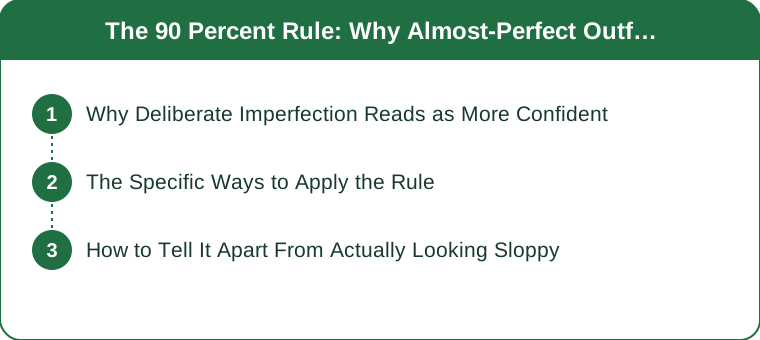
Why Deliberate Imperfection Reads as More Confident
The psychology of it: the the-too-perfect-signals-effort-not-ease (the a flawlessly buttoned, precisely matched outfit reading as if it took visible effort to assemble, which paradoxically signals less confidence — the visible-effort-undercuts-the-confident-read), the the-one-undone-detail-signals-ease (the a single relaxed detail — an unbuttoned cuff, a loosely tucked shirt — signaling that you’re not overthinking the outfit, which reads as ease and confidence — the one-relaxed-detail-signals-you-dont-need-to-try-too-hard), the the-brain-reads-asymmetry-as-more-interesting (the slight asymmetry or imperfection giving the eye something specific to land on rather than a flat, uniform perfection — the asymmetry-creates-visual-interest), the the-perfect-symmetry-can-look-costume-like (the a fully matched, fully precise outfit sometimes tipping toward looking staged or costume-like rather than lived-in — the too-matched-reads-as-staged), the the-editorial-styling-uses-this-constantly (the fashion editorial styling deliberately messing up one element of an otherwise polished look as a standard technique — the it’s-a-known-professional-technique-not-an-accident), and the reframe (the 90 percent rule as a deliberate technique, not carelessness — one intentionally relaxed element makes the other ninety percent of the outfit read as more effortlessly confident).

The Specific Ways to Apply the Rule
The actual moves: the untuck-just-the-front-or-one-side (the a half-tuck or front-tuck instead of a fully tucked-in shirt, a classic and reliable version of the technique — the the-half-tuck-is-the-most-famous-example), the the-push-up-one-sleeve (the rolling or pushing up sleeves on a blazer or shirt rather than leaving them fully buttoned down — the sleeve-push-signals-casual-ease), the the-leave-one-button-open (the leaving the top button of a shirt or blazer undone rather than buttoning fully to the collar — the the-classic-one-button-rule), the the-let-one-piece-be-slightly-oversized (the pairing one deliberately oversized or relaxed piece against otherwise fitted pieces — the one-relaxed-silhouette-element), the the-slightly-undo-a-hairstyle-or-accessory (the loosening a too-perfect bun or letting one piece of jewelry sit asymmetrically — the imperfection-can-live-outside-the-clothing-too), and the frame (the specific applications as a half-tuck, a pushed-up sleeve, one open button, one oversized piece, or one slightly undone styling detail — pick exactly one, not several, since the rule works through contrast against an otherwise put-together look).
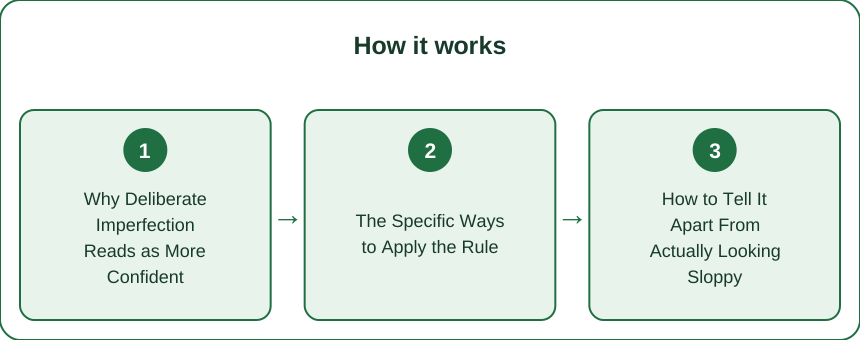
How to Tell It Apart From Actually Looking Sloppy
The distinguishing line: the the-rest-of-the-outfit-must-be-genuinely-put-together (the technique only working when everything else is clean, well-fitted and intentional — the imperfect-detail-needs-a-polished-foundation-to-work-against), the the-imperfection-should-be-one-detail-not-several (the rule failing once more than one element looks undone, since that reads as actually disorganized rather than deliberate — the one-detail-not-a-pattern-of-them), the the-fabric-and-fit-still-need-to-be-good (the technique working on well-fitting, quality pieces, not as a way to excuse ill-fitting or worn-out clothing — the it-elevates-good-clothes-not-a-fix-for-bad-ones), the the-it-should-look-chosen-not-accidental (the detail reading as a considered choice — a purposeful half-tuck — rather than something that happened by accident, like a genuinely missed button — the intentionality-is-what-separates-the-two), the the-context-matters-for-degree (the amount of acceptable imperfection varying by setting, with more formal contexts requiring a lighter touch than casual ones — the match-the-degree-to-the-setting), and the frame (the dividing line as a genuinely put-together foundation, exactly one imperfect detail, quality well-fitting pieces, an intentional rather than accidental feel, and a degree matched to context — imperfection as a deliberate accent, not a description of the whole outfit).
A single deliberately relaxed detail — an untucked shirt front, a pushed-up sleeve, one open button — reads as more confident than an outfit that’s flawlessly buttoned and precisely matched, because visible perfection paradoxically signals effort rather than ease, while one intentional imperfection signals you’re not overthinking it. Apply the rule with exactly one move at a time: a half-tuck, a pushed-up sleeve, one undone button, one deliberately oversized piece, or one slightly loosened styling detail. The technique only works when everything else in the outfit is genuinely well-fitted, clean and intentional, and when the one imperfect detail reads as a considered choice rather than an accident — it’s an accent on an otherwise put-together look, not a description of the whole outfit.
Keep Reading
This article is for general informational purposes only and is not medical advice. It is not a substitute for professional diagnosis or treatment. Always consult a qualified healthcare provider about your individual situation, especially before making significant changes to your diet or exercise routine.